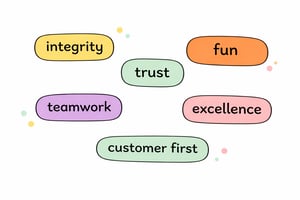
Core values are a guiding compass for your organization, influencing everything from hiring and...
 4.8 on G2 Trusted by 3k+ teams worldwide
Core values are what create cohesive, high-performing teams. However, defining, displaying, and getting everyone on board with those values is a challenge for most. I've discovered that it doesn’t have to be. Clear communication, leading by example, and using intuitive tools keep your core values at the forefront of daily operations.
I've been building workplace software at HeyTaco for nearly a decade. I see why most value-based peer recognition tools don't work. They either try to do too much or have a high-friction user experience. This results in people not wanting to use the tool (AKA low engagement).
This realization led me to create Taco Tags, a straightforward and seamless way to reinforce core values within a person's existing Slack and Microsoft Teams workflow.
What are Taco Tags?
Taco Tags are hashtags added to recognition messages that identify specific company values or behaviors.
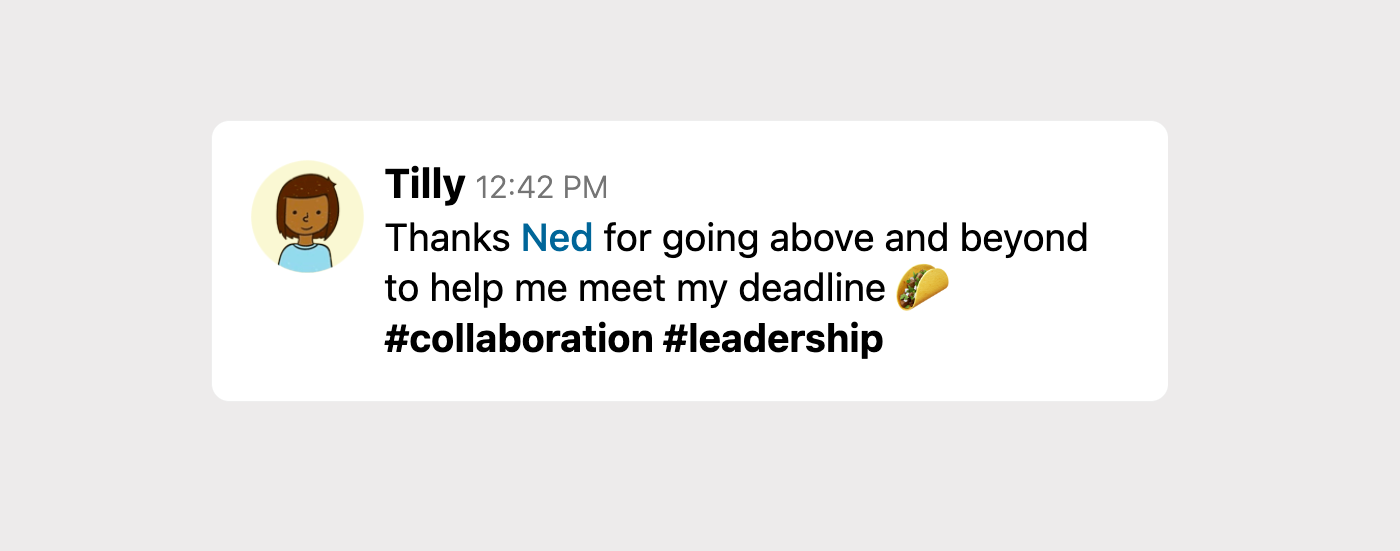
Imagine an employee going above and beyond to help a colleague meet a deadline. Or someone who is consistently demonstrating leadership qualities by taking initiative. With Taco Tags, peers can attach the appropriate value—such as "#collaboration" or "#leadership"—when giving recognition. This feature makes specific recognition easy, familiar, and more meaningful.
How do you use Taco Tags?
To use Taco Tags, you simply add hashtags to your message. There are no buttons, dropdowns, or forms to fill out. You don't need to sign in five times and give someone your social security number to thank a teammate for something awesome they did. It all happens when recognition is given in a person's existing workflow. That's it. It's a simple but powerful way to keep company values top-of-mind while cultivating a positive, value-based culture.
Taco Tags vs. Corporate Recognition Software
Most corporate recognition software on the market has good intentions. They still interrupt the user's experience with clunky UI patterns.
For example, with the tool pictured below, you must fill out a form to thank someone and recognize them for living a value. These extra steps create resistance in the recognition process, making it harder for people to actually want to do it.
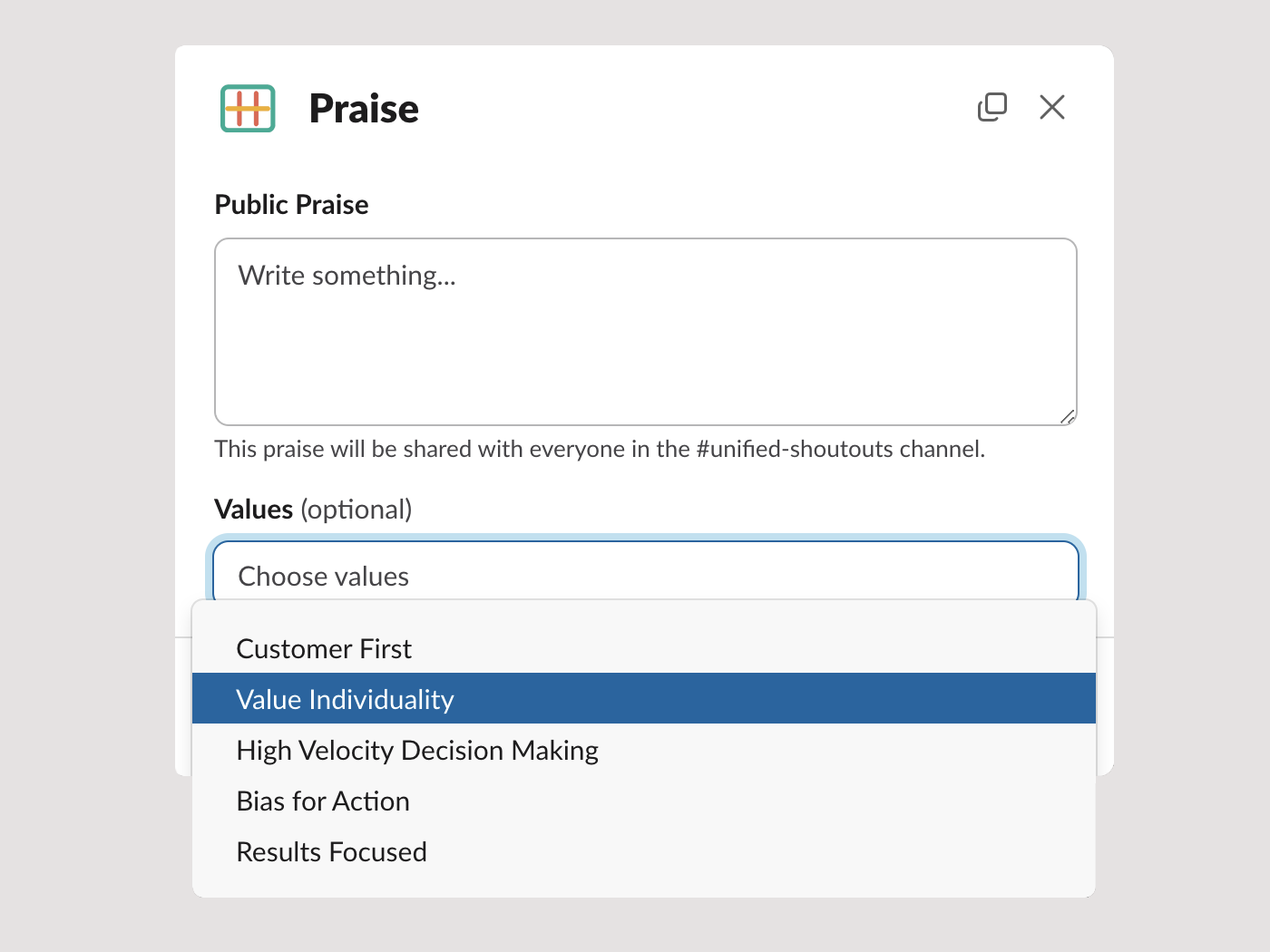
Even though the interface is pretty, completing the form takes time. It happens outside of the moment; it can feel like "work."
It also feels high-stakes with systematic confirmation messages (pictured below). It feels like you are submitting a nomination form for the next local city council member and not just wanting to share a thank you with someone. Recognizing someone with a value IS important. That is exactly why we want to make it seamless and easy for people to do it—we want more of it.
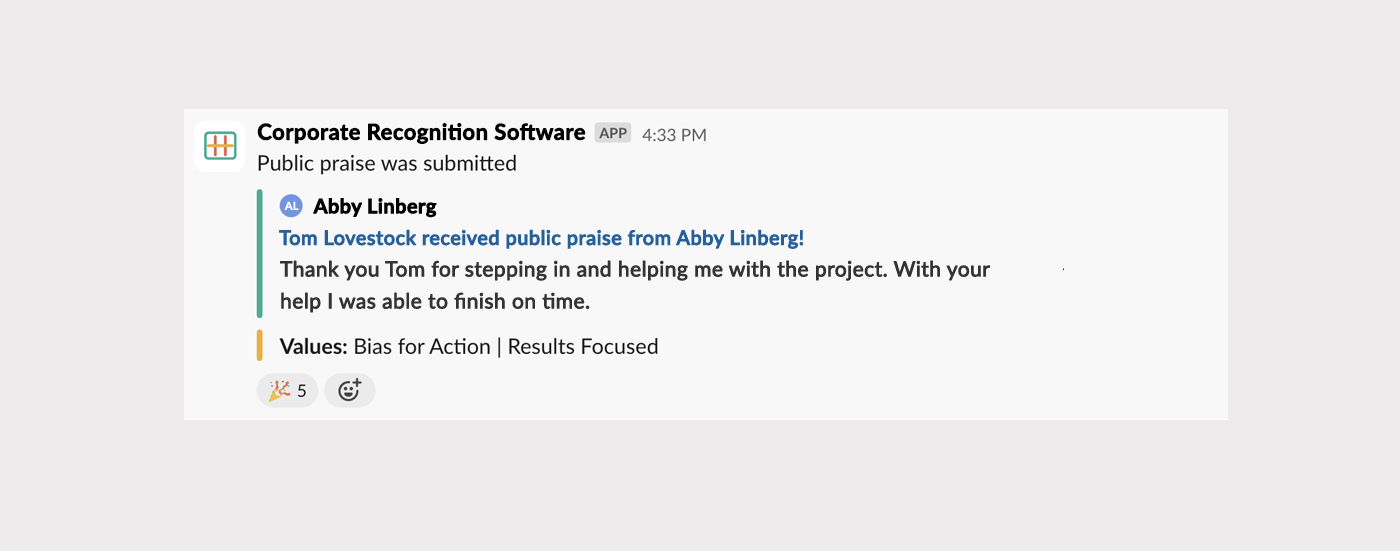
These design choices negatively affect the user's experience. However, the real problem is that tools like these are designed for the implementers rather than the end users. That’s why they result in lower user engagement than HeyTaco.
Why are Taco Tags better for value-based recognition?
I did not invent value-based recognition. However, I did develop a tool that drives "higher than normal" engagement and seamlessly connects core values to peer recognition. With HeyTaco, saying thank you happens in a person's workflow, making giving recognition super quick and easy.
Using hashtags is a familiar way of communicating. It's a more modern approach to value-based peer recognition. People don't need to fill out forms or learn new ways of doing things—they just do it.
Heck, my 13-year-old knows how to do it!
One final point: While predefined core value lists might seem beneficial, my experience with HeyTaco has shown that they often fall short. Many people select a value merely to move forward, which raises doubts about the reliability of the data. With HeyTaco, when someone types out a core value themselves, you can trust that it reflects genuine intent. They meant to do it.
Which begs the question of what you want to encourage on your team—compliance or genuine intrinsic behavior?

How to implement Taco Tags
If you want to incorporate Taco Tags into your company culture, the first step is defining the values you want to reinforce.
Once they are established, create simple, memorable hashtags that people can use when giving recognition. For instance, if Serve with integrity is a core value, you can use #integrity when recognizing peers who exhibit that core value. This process ensures the hashtags are easy to remember and align with your company's values.
Encourage your team to use Taco Tags by tying recognition to behaviors that align with the company's core values. One of the most powerful ways to ignite usage is to lead by example. Include Taco Tags in your recognition messages, and leaders can:
- Set a precedent for the team
- Showcase leadership values
- Acknowledge behaviors that reflect the company's core principles
Another great way to drive adoption is publicly celebrating employees who exemplify your company values. Reinforce values through:
- Hosting all-company meetings
- Initiating value-based challenges
- Sending Taco shoutout emails
Over time, using Taco Tags will significantly impact how your team adopts, embodies, and celebrates your core values.
A no-BS note: Will people always use a hashtag when they give a taco? No. Will you have to remind people to remember to use a hashtag when giving a taco? Absolutely yes. But, will people have fun, say thank you more than they used to, and keep your values at the top of their minds, even if not 100% of the time? For sure.
You can't automate and optimize your way to a great culture—you lead and inspire your way into a great culture.
Taco Tags: Micro-moments that add up to meaningful recognition
Taco Tags are a perfect example of how micro-moments of recognition can reinforce the values that matter most. Their purpose is to help build a culture where people feel appreciated and deeply connected to your organization's mission. By making recognition more intentional, Taco Tags help ensure that your values remain at the heart of your company, no matter how large or fast you grow.
Thanks for reading! 🌮
If you found this article valuable, please share it with your friends and colleagues, see the demo, and start your free trial.