At HeyTaco, positive recognition is critical to building a thriving workplace culture. A central...
 4.8 on G2 Trusted by 3k+ teams worldwide
Saying thank you is the most familiar and accessible way to express gratitude. However, saying thanks is not enough at most organizations. Especially those trying to build a positive, connected remote work culture.
TL;DR:
- Gratitude is an emotion, while recognition is an action.
- Quality recognition most accurately conveys and inspires real gratitude in a remote-first environment where a lot goes unseen.
- Small habits and peer involvement are more effective remote culture-builders than bigger, infrequent, top-down gestures.
The difference between gratitude and recognition in remote work culture
Gratitude is a complex human emotion. Feeling it frequently changes our brain chemistry for the better, increasing resilience and encouraging healing.
Recognition is an action. We can use it to externalize our feelings of gratitude, but it’s always meant to make something seen.
Many remote work cultures lack both. Much of the work is invisible; employee efforts happen somewhere out of view. They submit their work, managers say “thank you.” It’s an insufficient, generic expression of gratitude that doesn’t recognize their effort.
Instead, remote teams have to work to build a culture of gratitude. Specific, sincere gratitude, expressed through real recognition, makes the recipient feel more grateful, too. It boosts their desire to perform prosocial helping behaviors (like recognizing a coworker), keeping the cycle going. The two sustain one another.
5 Signs your remote work culture has that gratitude vs. recognition blind spot
Productivity is up among fully remote employees, but so is loneliness. Here are a handful of ways to tell that gratitude and recognition aren’t successfully linked at work.
Recognition is top-down.
Managers and team leads are the only ones who do shoutouts. Everyone is waiting for the CEO to give them their quarterly “Keep up the great work.” The cornerstone of this outdated recognition model may be a box of swag sent annually. In many cases, leaders haven’t fully bought into recognition and are meeting a quota.
Praise is vague and generic.
A lot of recognition involves remarks we’re so used to that they mean almost nothing. People don’t hear what it was about their work that was good. They don’t know how it improved anything at their company or impacted their coworkers. It didn’t convey sincere feelings of gratitude, and it doesn’t spark any, either.
Both are infrequent.
Consistency is a great quality, but that doesn’t ensure frequency. Monthly top-down shout-outs, annual reviews, and quarterly team-building events employees had no hand in choosing. Even in-office and hybrid workers need recognition every week, at least. Imagine how much more an isolated WFA employee needs it.
New hires don’t know who does what.
Freshly onboarded employees are watching. In a remote work culture, they have more trouble socially acclimating. Becoming familiar with nuanced information while committing the basics to memory is hard from a screen alone. When recognition isn’t specific or frequent, they never learn what coworker roles or strengths are, so they can’t recognize them either.
Turnover and retention rates aren’t improving.
No one has much of a connection with one another, so knowledge is lost when the remote worker inevitably leaves due to a lack of appreciation. This increases the cost of turnover, keeps employee retention below average, and makes culture-building a constant effort.

How to make gratitude from scratch with effective recognition
There’s little point in pitting gratitude vs. recognition when they could be working together. Here are the foundational rules of recognition that spur gratitude from every direction.
Make recognition public and specific.
It should feel normal to chime in the chat with a compliment that means something. High-quality recognition is personalized to the recipient, explains why their effort is appreciated, and the wider impact it had.
Praise values, not just performance.
Positive working environments and cohesive teams are made through much more than project success. They arrive once employees find purpose in their work, typically through alignment with core values.
Focus on daily habits over quarterly events.
Small daily actions that cost next to nothing are far more valuable than bigger initiatives. Recognition that’s easy to engage with means everyone gets real-time feedback. This clarifies purpose and reinforces progress. When those events do roll around, they’re attended voluntarily by happier people.
Give peers power.
Remote team recognition is a huge burden on leaders, making peer-to-peer recognition an absolute must. Coworkers running daily recognition offer better coverage for small wins, unseen efforts, and positive reinforcement at every turn. It also feels more authentic, which is key to having any positive psychological impact.
Real-life remote team recognition habits that build a culture of gratitude organically.
Discover how small gestures snowball into strong cultures with ideas for making recognition habitual.
- Create tiny, remote-specific rituals. From pairing off employees to a simple emoji vibe-check, remote team rituals offer chances to connect outside of meetings. With a little more rapport, they’re more willing to engage in recognition as a habit.
- Gather momentum. Companies like Rocket Money and Lumistry reward employees who act on values or share the most gratitude with peers. Daily recognition becomes the basis for monthly, quarterly, and annual team rituals.
- Let teams decide what resonates. People enjoy sharing what they love, whether it’s a tournament, charitable giving, or swag that symbolizes their culture, not just their employer. Team celebrations that they actually look forward to help define a work experience they’re grateful for.
Close the gratitude gap in remote work culture.
The real problem with expressing genuine emotion like gratitude is that it can feel weird or awkward at work. The solution is delivering it via recognition that’s fun and informal, which is why teams that add HeyTaco actually use it.
Here are the essential qualities that make linking gratitude and recognition a global success:
1. Chat-native. It’s easier to make a habit of recognition that’s a natural feature of the digital landscape.
2. Daily virtual taco limits. You can only give so much recognition every day, keeping it meaningful.
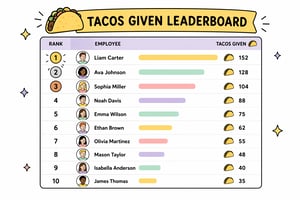
3. Leaderboards. An element of gamification lets organizations recognize those who are most generous with praise.
4. Ties in with core values: Remote workers can be recognized for something other than what they submit.
5: An instant cultural symbol. The thousands of teams using our award-winning peer recognition tool positively associate their tiny tacos as symbols of belonging and appreciation.
"With HeyTaco, there are so many small things to be grateful for every day — and tacos make it easy to recognize them."
- Steven Boutcher, QA Automation Engineer at Immunefi
Accentuate the positive and build a stronger remote work culture with a free trial.